

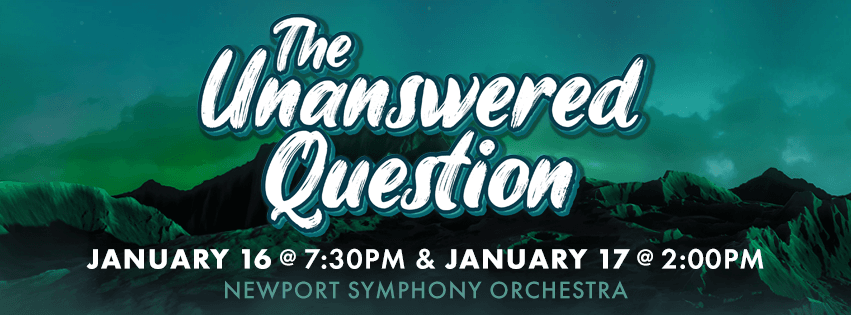
The Unanswered Question
Presented in Partnership with Habitat for Humanity of Lincoln County.
Sponsored by Oregon Coast Bank
January 16th, 2027 @ 7:30pm - Preconcert chat at 6:45pm
January 17th, 2027 @ 2:00pm
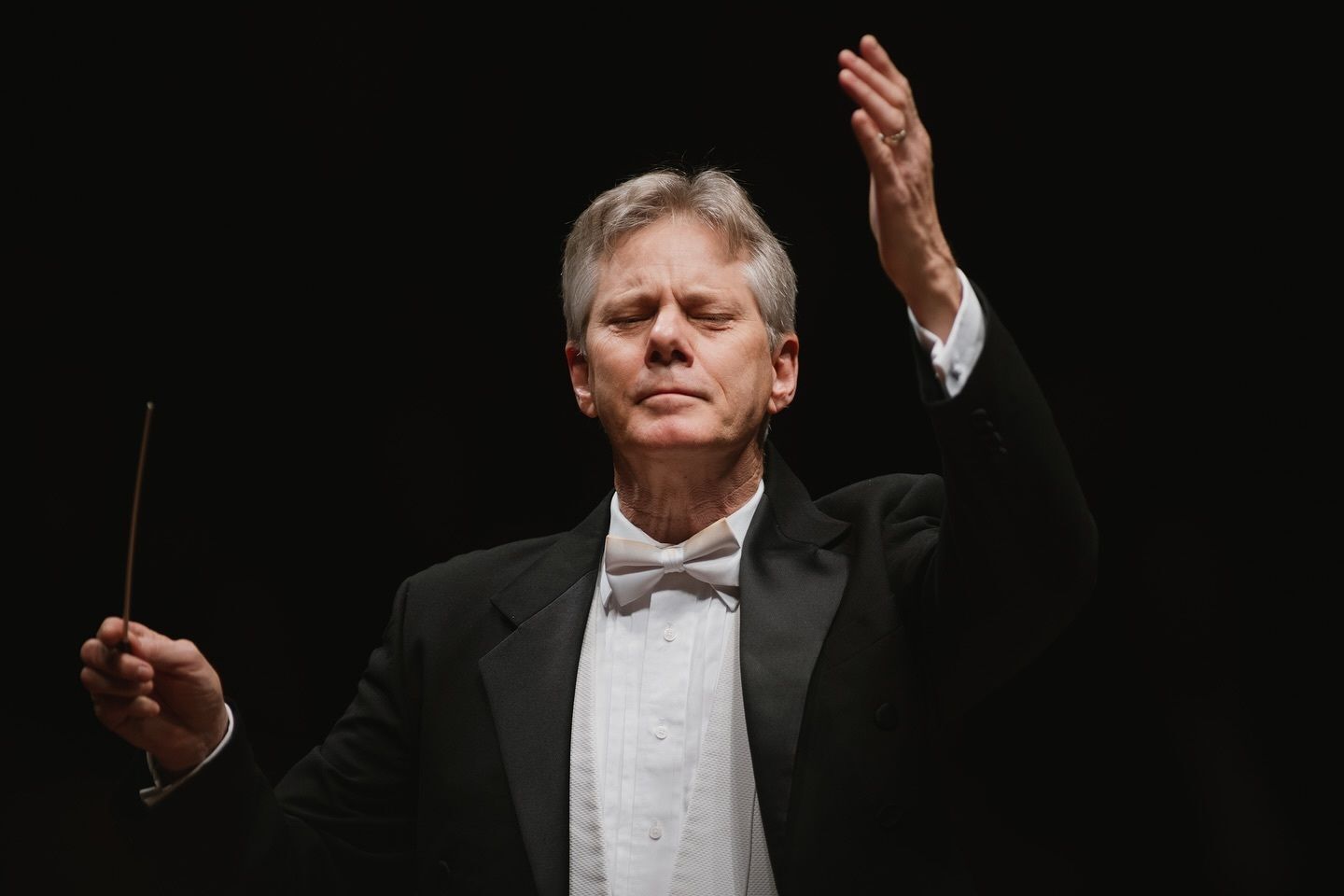
Adam Flatt, conductor
Get your tickets today! (541)265-2787 or online at coastarts.org/nso
Giuseppe Verdi
Overture to "La Forza del Destino"
Wolfgang Amadeus Mozart
Symphony No. 40 in G minor, K. 550
- - INTERMISSION - -
Charles Ives
The Unanswered Question
Franz Liszt
Les Preludes
Giuseppe Verdi, Overture to La Forza del Destino
1 piccolo, 1 flute, 2 oboes, 2 clarinets, 2 bassoons, 4 horns, 2 trumpets, 3 trombones, cimbasso, timpani, bass drum, cymbals, 2 harps, strings.
Last performed on February 26th, 1999, and conducted by Sylvain Frémaux
By the 1860s, Verdi had conquered the world of Italian opera and was rapidly gaining influence in opera houses all over Europe. His rousing successes include works still central in the international operatic repertoire. “La Forza del Destino” (poetically, The Power of Fate) was first performed in St. Petersburg, Russia, in 1862, with several important productions following soon thereafter, including one in New York City in 1865. Verdi often revised his operas for a variety of reasons, including censorship, specific demands of the theatre, specific singers’ abilities and preferences, all common during those times. The 1869 revision of this opera included a new overture, which stands almost alone among overtures to Verdi operas as a concert favorite. Its popularity stems from the powerful drama imbued in the music from the very first imposing chords in the brass. There is a case to be made that the three chords are a rare example of a musical symbol in Verdi, in this instance, depicting the inevitable power of “fate,” hence the title of the opera. The plot of the opera is typical of the composer, being a thicket of doomed love, vicious wars, hidden identities, duels, vows to enter a monastery, ethnic hatred, and, of course, tragic death at the end.
The afore-mentioned chords in the brass open the work with a steely, powerful effect, followed by the famous, uneasy, and ominous main theme in the basses: four little ascending notes that tell us much. What follows is a well-wrought compendium of several of the main tunes from the opera, woven together somewhat like the tedious, complicated, and almost laughable plot. But the musical logic of Verdi’s overture is superb, and a truer reflection of the dramatic power and melodic riches of one of Italy’s greatest composers could not be essayed. Musical dark and light alternate, as the melodies from the opera intertwine, leading to the thundering conclusion that never fails to rouse.
© 2015 William E. Runyan
Wolfgang Amadeus Mozart, Symphony No. 40 in G Minor, K. 550
1 flute, 2 oboes, 2 clarinets, 2 bassoons, 2 horns, strings.
Last performed on January 25th, 2003, and conducted by Sylvain Frémaux
Mozart wrote some of his most heartfelt and serious music in G minor, and so it is here. He had composed the Sturm und Drang “little” G minor symphony when only 17; these two in G minor are the only symphonies in a minor key out of the forty-one that he composed. The later G minor symphony exists in two versions, with and without clarinets in the wind section. This one, with clarinets, is likely the second version, and most likely made for a specific performance, based upon the local orchestra. Missing from the orchestra in this work are the usual trumpets and timpani.
The brooding first movement begins with just a bit of a murmur in the lower strings before the famous main theme comes in. It’s for strings only, but listen for the delightful addition of the sustained woodwinds upon the theme’s repeat. A bustling transition leads to the happy, lyrical second theme in the usual relative major. Brief allusions to the first theme still appear, though, and we soon have a dynamic exploration of it in the development. The recap comes with remarkably concise movement.
The following andante in E-flat major takes us away from the turmoil of the first movement. The first theme begins smoothly stepwise, followed by an expressive droop over a throbbing bass. The second theme features a birdlike “chirping” rhythm, easy to spot, and becomes a signal motive in the movement. A third theme closes out the beginning. Development of these ideas begins with an intensification of the pounding bass, and the main ideas are, again, clear. In his maturity, Mozart’s mastery of orchestra color comes to the fore in this section in the imaginative contrasts of color and mass.
The third movement was conventionally a minuet in those times, but this one is only an “honorary” minuet. Its salient characteristic, other than being in a dark minor mode, is the hemiola rhythm. The usual middle section features a turn to the pleasant parallel G major key, its only incidence in the symphony. Here, the woodwinds assume prominence, aided by the pair of horns.
The energetic finale begins with a standard cliché of the times, a “Mannheim rocket”, a rapid ascending arpeggio covering more than an octave. The second theme, in the usual relative Bb major, is somewhat more lyrical. The strings take the first turn at it, and then it’s heard prominently in the solo clarinet. The relentless tempo drives right into the development, where the opening figure is driven all over the harmonic map, accompanied by impressive contrapuntal figuration. The recap blazes to a dramatic ending, no less evocative and darkly emphatic than any tragic opera.
©2020 William E. Runyan
Charles Ives, The Unanswered Question
4 flutes, 1 trumpet, strings
Last performed on January 31st, 2016, and conducted by Adam Flatt
From the beginnings of his public career, Ives was a forerunner in discovering, on his own, many of the devices associated with musical Modernism: polytonality, polyrhythm, free dissonance, chance and collage effects, spatial music, and on and on, most of them already on display in The Unanswered Question, written in the first decade of the 20th century. It was a long time before people began to ask whether Ives was innovating for the sake of innovation or getting at something deeper.
In The Unanswered Question, a miniature Ives called a "cosmic drama," one finds distilled his revolutionary means, and more importantly, the ends of his singular art. The piece is a kind of collage in three distinct layers, roughly coordinated. In the background, a quiet and hauntingly beautiful chorale of strings represents, said Ives, "the silence of the Druids." Over that silence, a solo trumpet proclaims, again and again, an enigmatic phrase representing "the perennial question of existence." In response to each question, a quartet of winds Ives called the "fighting answerers" runs around in search of a reply, becoming more and more frustrated until they reach a scream of rage. Then the trumpet proclaims the question once more, to be answered by silence.
© Jan Swafford
Franz Liszt, Les Préludes
3 flutes, 2 oboes, 2 clarinets, 2 bassoons, 4 horns, 2 trumpets, 3 trombones, 1 tuba, timpani, field drum, cymbals, strings.
Last performed on March 25th, 2018, and conducted by Adam Flatt.
“What else is our life but a series of preludes to that unknown song, the first and solemn note of which is sounded by death?” So goes the reputed source of the title of the first of Liszt’s thirteen tone poems. It is from Alphonse de Lamartine’s “Nouvelles méditations poétiques,” and alludes to life as but a prelude to death. Liszt was at the forefront of composers who were committed to striking out in completely new directions during the nineteenth century, and who largely abandoned traditional forms, such as the symphony. Liszt’s solution was his origination of what he called a “symphonic poem,” a single-movement composition of symphonic proportions, which focused on the exploration of a single idea, poetic content, or even a narrative depiction. And so it is with Les Préludes.
The initial three notes serve throughout as the origin of the themes of each section, which differ greatly in mood, tempo, and key. As Liszt explores his take on the meaning of the text, the theme serves his various purposes, tying it all together, whether the subject is love, war, death, nature, and more. It is not necessary to track each guise of the theme as it evolves, but it may be easier than you think. With this idea, Liszt wrought a major innovation in Romantic musical style and provided a model for a legion of composers who took up the technique and the genre. Subsequent audiences have come to enjoy symphonic (or tone) poems as an integral and essential element of concert life.
© 2015 William E. Runyan
We are grateful to Oregon Coast Bank for their generous support.