
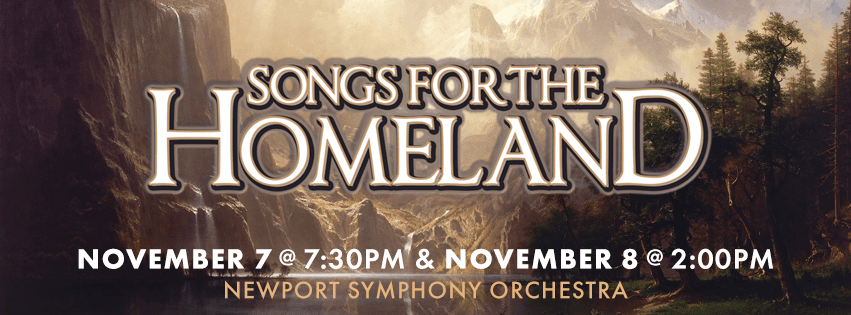
Songs for the Homeland
Presented in Partnership with the Lincoln County Historical Society
November 7th, 2026 @ 7:30pm - Preconcert chat at 6:45pm
November 8th, 2026 @ 2:00pm
Adam Flatt, conductor
Rodolfo Leone, piano*
Get your tickets today! (541)265-2787 or online at coastarts.org/nso
William Schuman
New England Triptych
Jean Sibelius
Finlandia
- - INTERMISSION - -
Edvard Grieg
Piano Concerto in A minor, Op. 16*
Rodolfo Leone, piano
Jean Sibelius
Symphony No. 5 in E-flat minor, Op. 82
William Schuman, New England Triptych
3 flutes (the third doubling piccolo), 2 oboes, 1 English horn, 1 E-flat clarinet, 2 clarinets, 1 bass clarinet, 2 bassoons, 4 horns, 3 trumpets, 3 trombones, 1 tuba, timpani, bass drum, cymbals, snare drum, tenor drum, and strings
Last performed on September 19, 2021, and conducted by Adam Flatt (second movement only)
It’s hard to decide if William Schuman made a greater impact upon American musical life as a composer or as a music administrator; he enjoyed a distinguished career as both. Born in the Bronx, his early musical life revolved around popular music; he composed a tango as his first effort and formed his own dance band. As a very young man, he collaborated with the great Frank Loesser and Edward B. Marks. But his career in publishing popular songs gradually ended when he went to his first symphony concert at the age of twenty, hearing Toscanini and the New York Philharmonic. He thereupon dropped out of business school and started music studies at the Juilliard School and the Salzburg Mozarteum, and ultimately earned bachelor’s and master’s degrees from Columbia. His compositions came to the notice of such luminaries as Copland and Koussevitzky, and by the early nineteen forties, the commissions and honors came rolling in.
New England Triptych is a setting of three hymns by an important New England composer from the time of the American Revolution, William Billings (1746-1800). Schuman wrote: “His works capture the spirit of sinewy ruggedness, deep religiosity, and patriotic fervor that we associate with the Revolutionary period in American history.” The first movement skillfully weaves together different parts of Billings’ hymn, showing Schuman’s preference for clear separation of orchestral colors. The second movement features solo bassoon, and then accompanying oboe, in a kind of round, following Billings’ original. The last movement is a spirited evocation of the hymn that became the Colonial Army’s marching song:
Let tyrants shake their iron rod,
And slavery clank her galling chains,
We fear them not, we trust in God,
New England’s God forever reigns.
© 2015 William E. Runyan
Jean Sibelius, Finlandia, Op. 26
2 flutes, 2 oboes, 2 clarinets, 2 bassoons, 4 horns, 3 trumpets, 3 trombones, 1 tuba, timpani, bass drum, cymbals, triangle, strings.
Last performed on January 31, 2010, and conducted by Adam Flatt.
Sibelius was a prolific composer, and his symphonies enjoy frequent performances; none of his works, however, achieved the popularity of Finlandia. Finland had for centuries languished under the rule of Sweden, and then in the early nineteenth century fell under the control of Russia, becoming a grand duchy of the Russian Empire. Surging nationalism manifested itself in a variety of ways, including a patriotic melodrama given in 1899 in Helsinki. Sibelius contributed incidental music to this enterprise, the last tableau of which was entitled Suomi Herää (Finland Awakens). He reworked the piece into a symphonic tone poem the next year and renamed it Finlandia. It opens with ominous brass chords, moves on into a tumultuous, faster section that seems to parallel a growing national sense of strength, and ends triumphantly with a powerful chorale, heard earlier, in a soft aura of confidence. The chorale has entered the realm of popular church music under the title, “Be Still My Soul,” but it stands alone as the most affirmative statement of the confidence and independence of the Finnish people.
© 2015 William E. Runyan
Edvard Grieg, Piano Concerto in A Minor, Op. 16
Solo piano, 2 flutes, 2 oboes, 2 clarinets, 2 bassoons, 4 horns, 2 trumpets, 3 trombones, timpani, strings.
Easily Grieg’s most famous work, it was composed in 1868, when the composer was only twenty-five years of age. Married the year before, he, his wife, and their two-month-old daughter were in Denmark, escaping the more rigorous Norwegian climate. Grieg was an excellent pianist; it was a major focus of his life as a composer, and he had the privilege of hearing Schumann’s piano concerto played by Schumann’s wife, the great virtuosa, Clara Schumann. It has long been generally accepted that the Schumann composition informed much of the young Grieg’s concerto. With its multitude of attractive melodies and its dramatic musical rhetoric, it became a Norwegian favorite almost immediately. The greatest pianist of the time, Franz Liszt, read through it early on and praised it with unreserved enthusiasm.
Grieg’s musical panache is in evidence from the beginning when the timpani crescendos right into the soloist’s big-time entry. This dramatic beginning is followed by a winsome succession of tunes, memorably led by the melody in the cellos accompanied by trombone chords. The tender second movement has been associated with Grieg’s response to the birth of his daughter, Alexandra. The last movement is based upon the rhythms of the traditional Norwegian folk dance, the halling, with a lyrical diversion in the middle, featuring a solo flute.
© 2015 William E. Runyan
Jean Sibelius, Symphony No. 5 in E-flat Major, Op. 82
2 flutes, 2 oboes, 2 clarinets, 2 bassoons, 4 horns, 3 trumpets, 3 trombones, timpani, strings.
The fifth symphony was composed at a particularly crucial time in Sibelius’ creative life; finished in 1915 for the concerts given in celebration of his fiftieth birthday, it was immediately revised the next year, and even more so in 1919.
It has four movements, but the first two are literally composed into each other, so they are heard as one long continuous movement that evolves gradually in a slew of ideas derived from the initial horn calls and others in the rippling woodwinds. One can hear some folk-like elements as we go along, but the big thing is to listen for the masterful way Sibelius manages a long and almost seamless transition into the scherzo-like conclusion. You can spot the beginning of this final section by the trumpet solo that marks it. Again, the novelty is the sneaky way that Sibelius challenges us to figure out whether this movement is two things run together, or one thing in a complex, innovative form.
The second movement is traditional in that after the faster, dance-like section, there follows the expected slow contrast, but Sibelius doesn’t make it too slow, more a kind of intermezzo. Here it takes the form of a set of variations based upon the little five-note figure first heard tweeting in the flutes. The last movement provides a welcome and uplifting clarity. Those who appreciate his ever-popular second symphony, wherein one waits for the big, glorious tune to finally appear in the last movement, will experience the same here. Sibelius was a sensitive enthusiast of the flora and fauna of his beloved Finnish landscape, particularly the native waterfowl. Tales about them, and his musical depiction of them, are a common element in his work, and in this last movement, we heard the famous “swan” theme. It splendidly evokes the migrating swans that appeared over his rural home, Ainola, deep in the Finnish woods. After an initial flurry in the strings, the majestic swan theme rises out of the horn section. Another theme appears, and after some development, the movement and the symphony close on a rising tide of happy sounds, the swans to the fore. Six dynamic exclamatory chords end the work.
© William E. Runyan
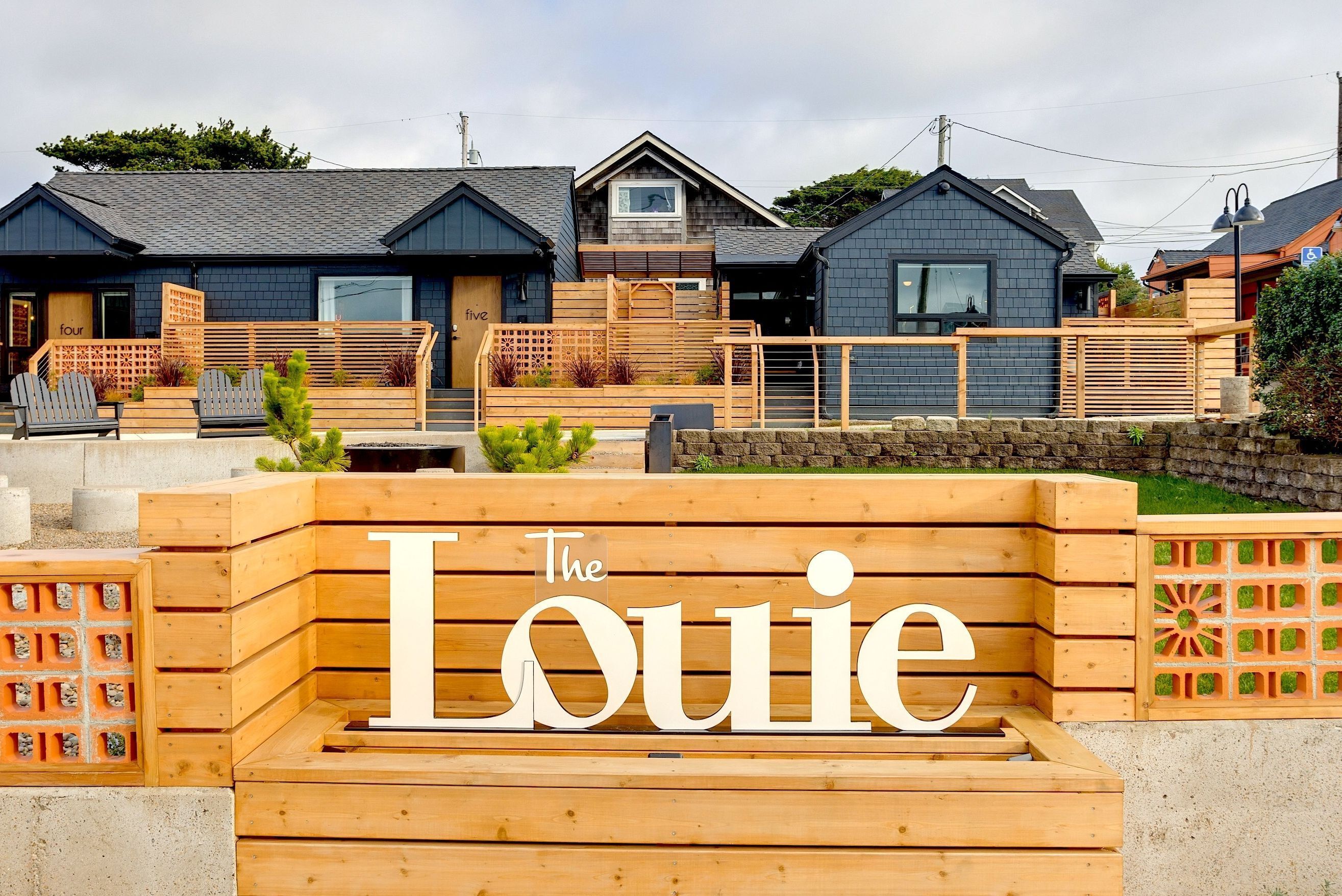
Housing for Rodolfo Leone is generously provided by The Louie, Boutique Motel.
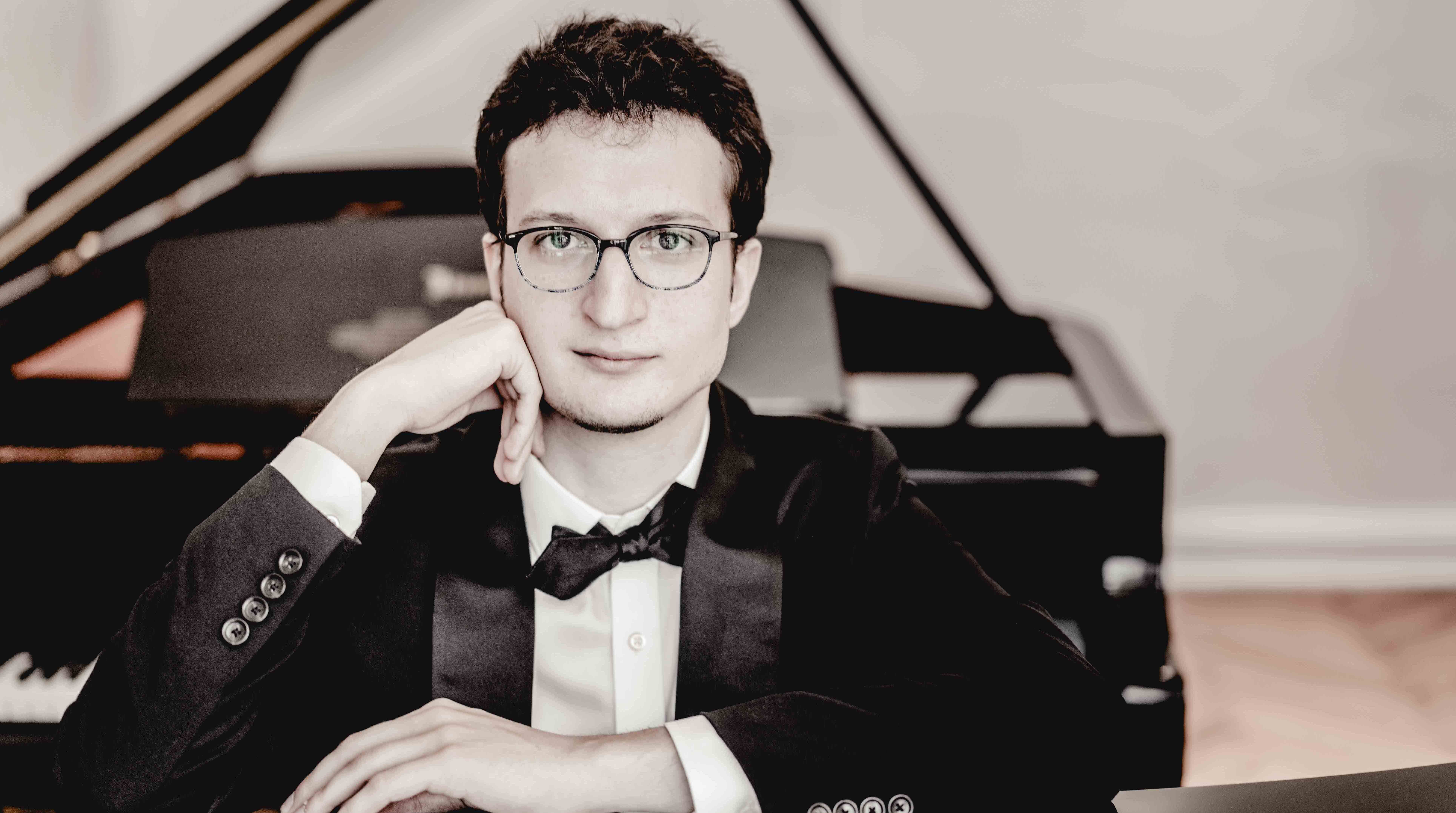
Rodolfo Leone, piano photo credit Andrej Grilc
The brilliant 29-year-old Italian-born pianist Rodolfo Leone, whose career is supported by the Amron-Sutherland Fund for Young Pianists at the Colburn School, was the first-prize winner of the 2017 International Beethoven Piano Competition Vienna. Described as “a true sound philosopher” (Oberösterreichische Nachrichten), Rodolfo released his debut album on the Austrian label Gramola in May 2018. The all-Beethoven disc features two pillars of the piano repertoire: the “Hammerklavier” Sonata and the “Waldstein” Sonata. His playing has been described as having “impeccable style” and “absolute technical control” (Il Nuovo Amico).
Rodolfo’s recent seasons include a collaboration with James Conlon and LA Opera and debuts with the San Diego Symphony (Liszt’s Piano Concerto No. 1) conducted by Michael Francis, Pasadena Symphony (Mozart’s Piano Concerto No. 21) with conductor David Lockington, and Borusan Istanbul Philharmonic Orchestra (Beethoven’s Concerto No. 5, “Emperor”) with Sascha Goetzel; he also performed Beethoven’s Triple Concerto in Walt Disney Hall under the baton of Xian Zhang. In May 2019, he gave a recital tour in Austria, culminating in a performance in Vienna at the Brahms-Saal of the Musikverein. He also performed recitals in Los Angeles and Naples, Florida, and appeared on the chamber music series Le Salon de Musiques in Los Angeles. As a 2018-19 Performance Today Young Artist in Residence, Rodolfo’s live recordings were broadcast nationally throughout the United States.
A native of Turin, Italy, Rodolfo made his orchestral debut in 2013 performing Rachmaninov’s Piano Concerto No. 3 with the Haydn Orchestra of Bolzano and Trento (Italy). He toured Italy with that orchestra the following year performing Shostakovich’s Piano Concerto No. 1. Rodolfo made his North American debut in 2014 performing Liszt’s Piano Concerto No. 1 with the Toronto Concert Orchestra. Since then, he has performed with, among others, the Vienna Radio Symphony Orchestra with Stéphane Denève and the Colburn Orchestra at Walt Disney Concert Hall; and recitals at Festival Napa Valley and the Soka Performing Arts Center. He has also performed chamber music with Lynn Harrell, Fabio Bidini, Andrew Schulmann, and the Viano String Quartet.
Rodolfo has performed extensively throughout Europe, North America, and China. These performances include debuts in venues such as the Musikverein in Vienna, Steinway Hall in London, the Music Hall of the National Centre for the Performing Arts in Beijing, the Politeama Theatre in Palermo, the Mozart Concert Hall of Accademia Filarmonica and Teatro Carlo Felice di Genova in Italy, and the BASF Gesellschaftshaus in Germany. A top-prize winner of several major piano competitions, Rodolfo was awarded top prizes at the 2014 Toronto International Piano Competition and the 2013 Busoni International Piano Competition. Pianist magazine described his concerto performance during the 2017 International Beethoven Piano Competition as a “communion with the orchestra” that “was raptly convincing… robust and joyful.”
Rodolfo is currently based in Los Angeles where he previously studied at the Colburn Conservatory of Music. He holds both a Master of Music degree and an Artist Diploma from Colburn, where he studied with Fabio Bidini. He previously studied at the Hans Eisler School of Music in Berlin, Germany and at the G. Rossini Conservatory in Pesaro, Italy.